In the digital age, our lives are increasingly interconnected with the internet. We rely on online services for communication, education, entertainment, and more. However, as we enjoy the convenience and benefits of the internet, it’s crucial to be aware of the potential risks to our online privacy. This article will explore why online privacy matters for families and how tools like Virtual Private Networks (VPNs) can help protect your digital life.
Tracking by Websites: Your Online Footprint Every time you visit a website, you leave a digital footprint. Websites use various tracking technologies, such as cookies and web beacons, to collect information about your online behavior. This includes the pages you visit, the links you click, and even how long you spend on each page.
While some tracking is used to improve user experience, such as remembering your preferences or keeping you logged in, other tracking is designed to gather data for targeted advertising or to sell to third parties. This means that your online activities are being monitored and analyzed, often without your explicit consent.
Data Collection: Building Digital Profiles As websites track your online behavior, they collect a vast amount of data about you and your family. This data can include your location, age, gender, interests, and even your search history. Over time, this information is used to build detailed digital profiles that can reveal intimate aspects of your life.
These profiles are valuable to advertisers, who use them to target you with personalized ads. While seeing relevant ads might seem harmless, it can also feel intrusive and raise concerns about how much companies know about you and your family.
Targeted Ads: The Price of “Free” Services Many online services, such as social media platforms and search engines, are offered for “free.” However, the reality is that these services come at a cost: your personal data. By collecting and analyzing your data, these companies can sell targeted advertising space to businesses, which is how they generate revenue.
While targeted ads can be useful when they show you relevant products or services, they can also be inappropriate or even dangerous for children. For example, a child who searches for information about weight loss might start seeing ads for diet pills or extreme weight loss programs, which can be harmful to their physical and mental health.
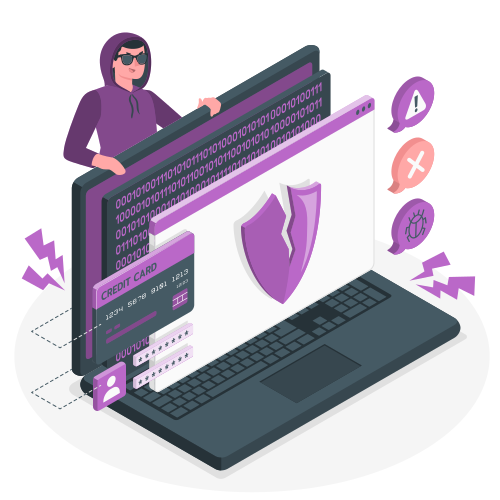
Identity Theft: The Importance of Protecting Personal Information One of the most serious risks of online privacy breaches is identity theft. When hackers gain access to your personal information, such as your name, address, social security number, or credit card details, they can use it to commit fraud or other crimes.
Identity theft can have devastating consequences for families, including financial losses, damaged credit scores, and even legal troubles. Protecting your online privacy is essential to reducing the risk of identity theft and keeping your family’s personal information secure.
How VPNs Help Protect Online Privacy One effective tool for enhancing online privacy is a Virtual Private Network (VPN). A VPN creates a secure, encrypted connection between your device and the internet, making it much harder for websites, advertisers, and hackers to track your online activities.
When you use a VPN, your internet traffic is routed through a remote server, which hides your real IP address and location. This makes it difficult for websites to build detailed profiles about you and your family, reducing the risk of targeted ads and data collection.
Moreover, VPNs encrypt your internet connection, which means that even if a hacker intercepts your data, they won’t be able to read it. This added layer of security is especially important when using public WiFi networks, which are often unsecured and vulnerable to attacks.
Conclusion Online privacy is a critical issue for families in the digital age. By understanding the risks of website tracking, data collection, targeted ads, and identity theft, you can take steps to protect your family’s digital life. Using a VPN is one effective way to enhance online privacy, but it’s also important to practice safe browsing habits and to educate your family about the importance of protecting personal information online.
By prioritizing online privacy, you can help ensure that your family can enjoy the benefits of the internet while minimizing the risks to your personal data and digital well-being.