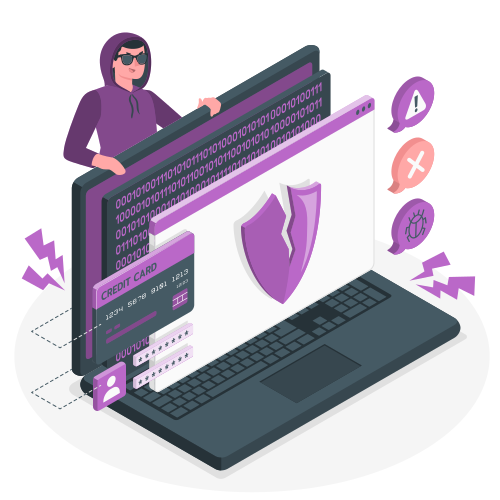
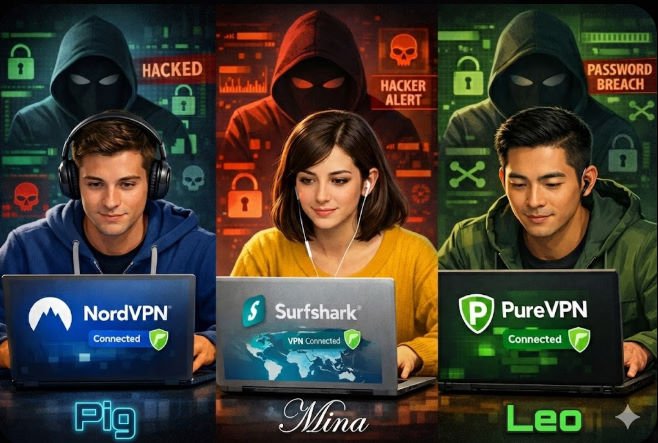
A Virtual Private Network, or VPN, is a tool that helps protect your online privacy and security. Think of it as a secret tunnel that you use to connect to the internet, keeping your online activities hidden from prying eyes.
How a VPN Works When you connect to the internet without a VPN, it’s like sending a postcard. Everyone who handles the postcard can see what’s written on it, including your personal information and online activities. But when you use a VPN, it’s like putting your postcard inside a sealed envelope. The envelope keeps your information private and secure, preventing others from seeing what’s inside.
Encryption: The Secret Code One of the main ways a VPN protects your privacy is through encryption. Encryption is like a secret code that scrambles your data, making it unreadable to anyone who intercepts it. When you use a VPN, all of your internet traffic is encrypted, so even if someone manages to get their hands on your data, they won’t be able to understand it.
Hiding Your IP Address: The Invisibility Cloak Another way a VPN protects your privacy is by hiding your IP address. An IP address is like your online home address – it reveals your location and identifies your device. When you connect to a VPN, your internet traffic is routed through a remote server, which replaces your real IP address with a different one. This makes it much harder for websites, advertisers, and hackers to track your online activities and identify your location.
Why Families Might Need a VPN There are several reasons why families might consider using a VPN:
- To protect their privacy when using public WiFi networks, which are often unsecured and vulnerable to attacks.
- To prevent websites and advertisers from collecting personal data and using it to create detailed profiles or target family members with inappropriate ads.
- To reduce the risk of identity theft by keeping personal information secure and private.
- To access content that might be restricted in their location, such as educational resources or family-friendly entertainment.
- To ensure a safe online experience for children by limiting exposure to tracking, targeted ads, and potential online threats.
Choosing a VPN When choosing a VPN for your family, look for one that offers strong encryption, a clear privacy policy, and user-friendly apps for all your devices. Some VPNs even offer additional features like ad-blocking and malware protection, which can further enhance your family’s online security.
Conclusion In today’s digital age, protecting your family’s online privacy is more important than ever. By using a VPN, you can create a secure, private connection to the internet, keeping your personal information and online activities hidden from prying eyes. With the added benefits of encryption and IP address masking, a VPN is a simple yet effective tool for families looking to safeguard their digital lives.