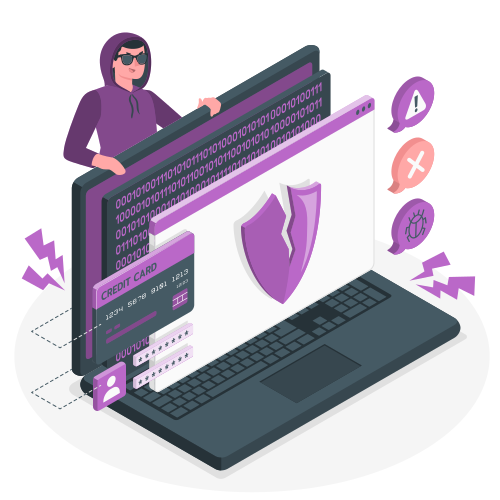

In our increasingly connected world, public WiFi has become a convenient way to stay online while on the go. Whether you’re at a café, airport, or hotel, chances are you’ve connected to a public WiFi network. But have you ever stopped to think about the safety of these networks? In this article, we’ll explore the risks associated with public WiFi and how you can protect yourself.
How Hackers Sniff Traffic When you connect to a public WiFi network, you’re sharing the same network with potentially hundreds of other users. This makes it easier for hackers to intercept your data using a technique called “packet sniffing.” Essentially, they use special software to monitor and capture the data transmitted over the network, which can include sensitive information like passwords, credit card numbers, and personal messages.
Risks in Cafes and Airports Cafes and airports are prime spots for hackers looking to target unsuspecting users. In 2018, a cybersecurity expert demonstrated how easy it was to hack public WiFi networks at a café in Budapest, Hungary. Using a simple tool, he was able to intercept the data of everyone connected to the network, including their browsing history and login credentials.
Similarly, in 2019, a traveler at an airport in Florida reported that his laptop had been hacked while he was connected to the airport’s WiFi. The hacker had gained access to his email and social media accounts, as well as his online banking information.
Real Examples of Attacks These are just a couple of examples of the many attacks that can occur on public WiFi networks. In 2017, a group of hackers targeted a chain of hotels in Europe, using the hotel’s WiFi to install malware on guests’ devices. The malware allowed the hackers to steal login credentials and other sensitive data.
In another incident, a popular restaurant chain in the United States suffered a data breach that exposed the payment card information of millions of customers. The hackers had gained access to the restaurant’s network through a vulnerability in their WiFi system.
How Encryption and VPNs Protect Users So, what can you do to protect yourself when using public WiFi? One of the most effective ways is to use encryption. Encryption scrambles your data so that even if a hacker intercepts it, they won’t be able to read it. Websites that use HTTPS (instead of HTTP) are encrypted, so always look for the padlock icon in your browser’s address bar before entering sensitive information.
Another way to protect yourself is by using a Virtual Private Network (VPN). A VPN creates a secure, encrypted tunnel between your device and the internet, making it much harder for hackers to intercept your data. When you connect to a VPN, all of your internet traffic is routed through this tunnel, so even if you’re on a public WiFi network, your data is protected.
Conclusion While public WiFi is convenient, it’s important to understand the risks involved. Hackers can easily intercept your data on these networks, leading to stolen passwords, financial information, and personal messages. However, by using encryption and a VPN, you can greatly reduce these risks and enjoy the convenience of public WiFi with peace of mind.
Remember, the next time you’re tempted to connect to that free WiFi at your favorite café or airport, take a moment to consider the potential risks and take steps to protect yourself. Your online safety is worth the extra effort.