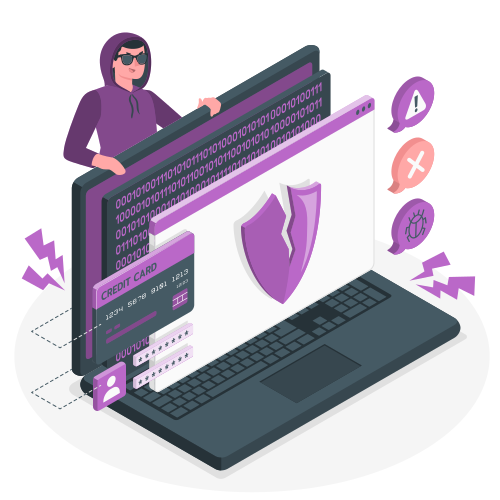
Imagine you’re sitting in a café, enjoying a cup of coffee while working on your laptop. You connect to the café’s free WiFi, thinking nothing of it. But did you know that someone else in the café might be able to see what you’re doing online? This is possible through a technique called WiFi sniffing, which allows attackers to capture and analyze network traffic. In this article, we’ll explore how WiFi sniffing works, describe a typical demonstration scenario, and explain how encryption and VPNs can help protect against this type of attack.
What is WiFi Sniffing? WiFi sniffing is the process of intercepting and analyzing data transmitted over a wireless network. When you connect to a WiFi network, your device sends and receives data packets that contain information about your online activities, such as the websites you visit, the emails you send, and the files you download. Normally, these data packets are only intended for your device and the websites or services you’re communicating with. However, an attacker can use special software to capture these packets and read their contents, potentially exposing sensitive information like login credentials, financial data, and personal messages.
A Demonstration Scenario To better understand how WiFi sniffing works, let’s consider a typical demonstration scenario. Imagine an attacker sitting in the same café as you, armed with a laptop and a WiFi adapter that supports promiscuous mode (a special setting that allows the adapter to capture all network traffic, not just the traffic intended for that device).
The attacker opens a packet sniffing tool, such as Wireshark or tcpdump, and starts capturing all the data packets being transmitted over the café’s WiFi network. As you browse the web, send emails, and use other online services, the attacker’s software intercepts and logs the data packets associated with your activities.
Once the attacker has captured a sufficient amount of data, they can analyze the packets to extract sensitive information. For example, if you logged into your email account or social media profile while connected to the café’s WiFi, the attacker might be able to see your username and password in plain text, allowing them to access your accounts and steal your personal information.
Protecting Against WiFi Sniffing with Encryption and VPNs While the thought of someone snooping on your online activities can be alarming, there are ways to protect yourself against WiFi sniffing attacks. Two of the most effective methods are encryption and using a virtual private network (VPN).
Encryption is the process of encoding data so that it can only be read by someone with the right decryption key. When you connect to a website using HTTPS (the secure version of HTTP), your browser establishes an encrypted connection with the website’s server. This means that even if an attacker intercepts the data packets being transmitted between your device and the website, they won’t be able to read the contents without the decryption key.
A VPN is a service that creates a secure, encrypted tunnel between your device and a remote server operated by the VPN provider. When you connect to a VPN, all your internet traffic is routed through this tunnel, making it much harder for attackers to intercept and analyze your data packets. Even if an attacker captures the encrypted data, they won’t be able to decipher it without the encryption key, which is only known by your device and the VPN server.
To protect yourself against WiFi sniffing attacks, make sure to:
- Use HTTPS whenever possible: Look for the padlock icon in your browser’s address bar and make sure the URL starts with “https://” before entering sensitive information like login credentials or financial data.
- Use a reputable VPN service: Choose a VPN provider that offers strong encryption, a no-logging policy, and a large network of servers to help keep your online activities private and secure.
- Avoid using public WiFi for sensitive tasks: If possible, wait until you’re on a secure, private network before accessing your online banking, email, or other accounts that contain personal information.
By understanding how WiFi sniffing works and taking steps to protect your online activities with encryption and VPNs, you can significantly reduce the risk of falling victim to this type of attack.
In conclusion, while WiFi sniffing may seem like a daunting threat, being aware of how it works and taking proactive measures to secure your online activities can go a long way in protecting your personal information. Remember, your online privacy and security are worth the extra effort!